
The Adoption of German ‘Brown Babies’
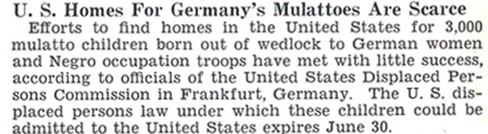
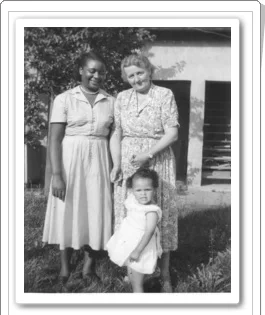
There were thousands of children born to African-American GIs and white German women in the years after World War II. The U.S. military’s policy at the time was to reject any claims of paternity made by German mothers. While many Black soldiers were determined to marry their German girlfriends and did, many found themselves not only forbidden to do so, but transferred to other bases or back to the U.S. as well. Countless soldiers went back to the U.S., not knowing they had fathered children, while others knowingly abandoned the women and the children to resume their lives back in America.
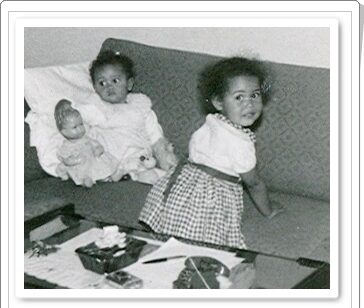
Many of the BGCS constituents are children who were born to German mothers who African American soldiers abandoned during the U. S. Occupation following World War II. While some children remained with their natural mothers, most were raised in orphanages or foster families. German families adopted some children; however, countless children were offered for adoption to African American military families stationed in Germany or African American civilian families in the United States under the Displaced Persons Act of 1948 (amended June 16, 1950), where it was assumed that they would “more easily assimilate into the culture.”
This result is a generation of culturally displaced persons who remain disconnected and alienated from the mainstream of the societies in which they live and from both ethnic communities to which they belong.
Adoption is a wonderful concept and is generally accepted as an ideal social mechanism for improving the lives and circumstances of abandoned or orphaned children. However, recent psychological and sociological research has determined that these children often suffer significant lifelong emotional and social problems such as identity deficits, separation and attachment disorders, and chronic depression, as well as other problems as a result of separation trauma and what has been identified as *“the primal wound.”
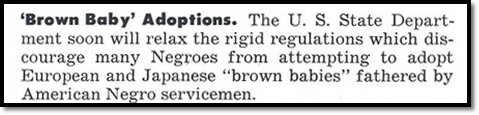
The issue is magnified, and the outlook becomes ever more complicated when we explore the international adoption and abandonment of interracial children who were created by opposing forces following a major global war. For the most part, there was no professional follow-up in terms of the physical, social, and emotional well-being of these children once they were placed.
Historians in the last decade have begun to study and write publications about the Brown Baby Plan and the cooperative attempt between the two governments to place and provide for these unwanted and displaced children. Autobiographical Interviews and publications have given voice to the trauma and lifelong suffering stemming from the dramatic loss of identity and heritage and the cultural alienation that these children faced, particularly while growing up both in post war Germany and in the US during the Civil Rights era, a period when intense racism and discrimination was under scrutiny and identified as a major problem in both societies.
*The Primal Wound: Understanding the Adopted Child by Nancy Verrier
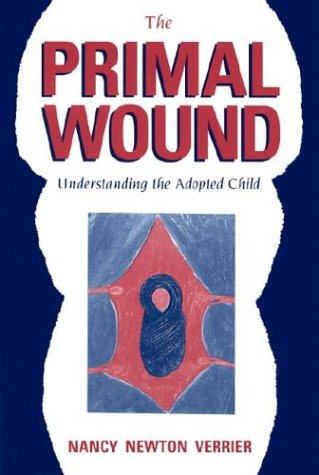
A challenging and courageous work. A book that adoptees call their “bible,” it is a must-read for anyone connected with adoption: adoptees, birth parents, adoptive parents, therapists, educators, and attorneys. In its application of information about perinatal psychology, attachment, bonding, and loss, “The Primal Wound” clarifies the effects of separation from the birthmother on adopted children. In addition, it gives adoptees, whose pain has long been unacknowledged or misunderstood, validation for their feelings, as well as explanations for their behavior. As one adoptee said, “Only one thing has caused me more pain and damage than the existence of the primal wound: the world’s insistence that it does not exist.” The existence of the primal wound and suggestions for healing that wound are intelligently and compassionately set forth in this book, which is fast becoming the quintessential work about the complex and lifelong process of adoption. The insight the author brings to the experience of abandonment and loss will contribute not only to the healing of those connected with adoption but will also bring understanding and encouragement to anyone who has ever felt abandoned.
MEMOIRS & STORIES BY ADULT AFRO-GERMAN
TRANSRACIAL/ TRANSCULTURAL ADOPTEES
A Brown Baby’s Journey by Frank Walters
A Little Brown Baby: An Afro-German Adoptee’s Story by Shirley Gindler-Price (Shirley Daniela Gindler)
A Question of Color by Daniel Cardwell
Between 2 Races by Tammy Lisa Carmen St Clair
Feeling Counterfeit by Heather Proffer
I’m a Part of History Many Want to Forget by Rudi Richardson (Udo Ackermann)
Invisible Woman: Growing Up Black in Germany by Ika Hugel-Marshall
It’s not always Black and White: Caught Between Two Worlds by Dr. John Reed
Mixed Blessing by Doris McMillon
My Soul Has Found Its Home by Shirley Gindler-Price
Split At The Root: A Memoir of Love and Lost Identity by Catana Tully
The Whorl According to My Gospel by Rudy Richardson
Information for Families Considering Transracial/ Transcultural Adoption: Transracial & Transcultural Adoption
Courtesy of Child Information Gateway
‘