
One of the first German films to explore the experiences of Black children born during the occupation, Toxi will be screened for free at the Goethe-Institut New York, accompanied by artist James Gregory Atkinson’s exhibition “3 Lieder für Marie Nejar,” a tribute to the Afro-German singer and actress known for the film’s title song. Atkinson will be joined by Yale University Assistant Professor of History of Art and Black Studies, Nana Adusei-Poku, for a discussion of the film. Registration is required to attend. The exhibition “3 Songs for Marie Nejar” will be on view at the Goethe-Institut New York through March 19, made possible by the generous support of the Hessian Cultural Foundation and the Friends of Goethe New York.
Toxi: A Reflection on Postwar German Society
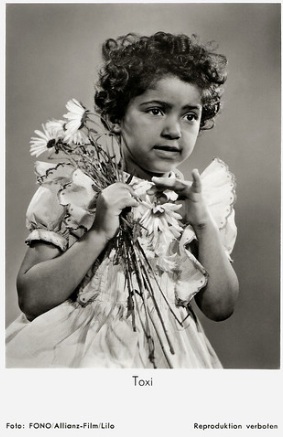
A prosperous family living in Hamburg is confronted with an unexpected situation when they discover a five-year-old girl abandoned at the entrance of their villa. The child, named Toxi, is Black and the daughter of a German woman—now deceased—and an American G.I. who has returned to the United States.
Director Robert A. Stemmle skillfully portrays the prevailing attitudes toward interracial relationships and multiracial children in postwar Germany. Through Toxi’s experiences and interactions with the family, the film candidly highlights German perspectives on race and racism, presenting these issues with notable honesty.
As Toxi gradually earns the German family’s affection, a turning point occurs: her American father returns, seeking to take her back to the United States. The film’s premiere coincided with the emergence of the first generation of children born from relationships between German women and American soldiers—many of whom were African American—beginning to attend German schools. This event raised public awareness of the unique challenges faced by these families and their children.